










LangRouter for TranslatePress
Rather than simply connecting a few more interfaces, LangRouter for TranslatePress upgrades automated translation into a set of execution links that can be streamed by content type, target language, and failure policy.How will a request be handled?
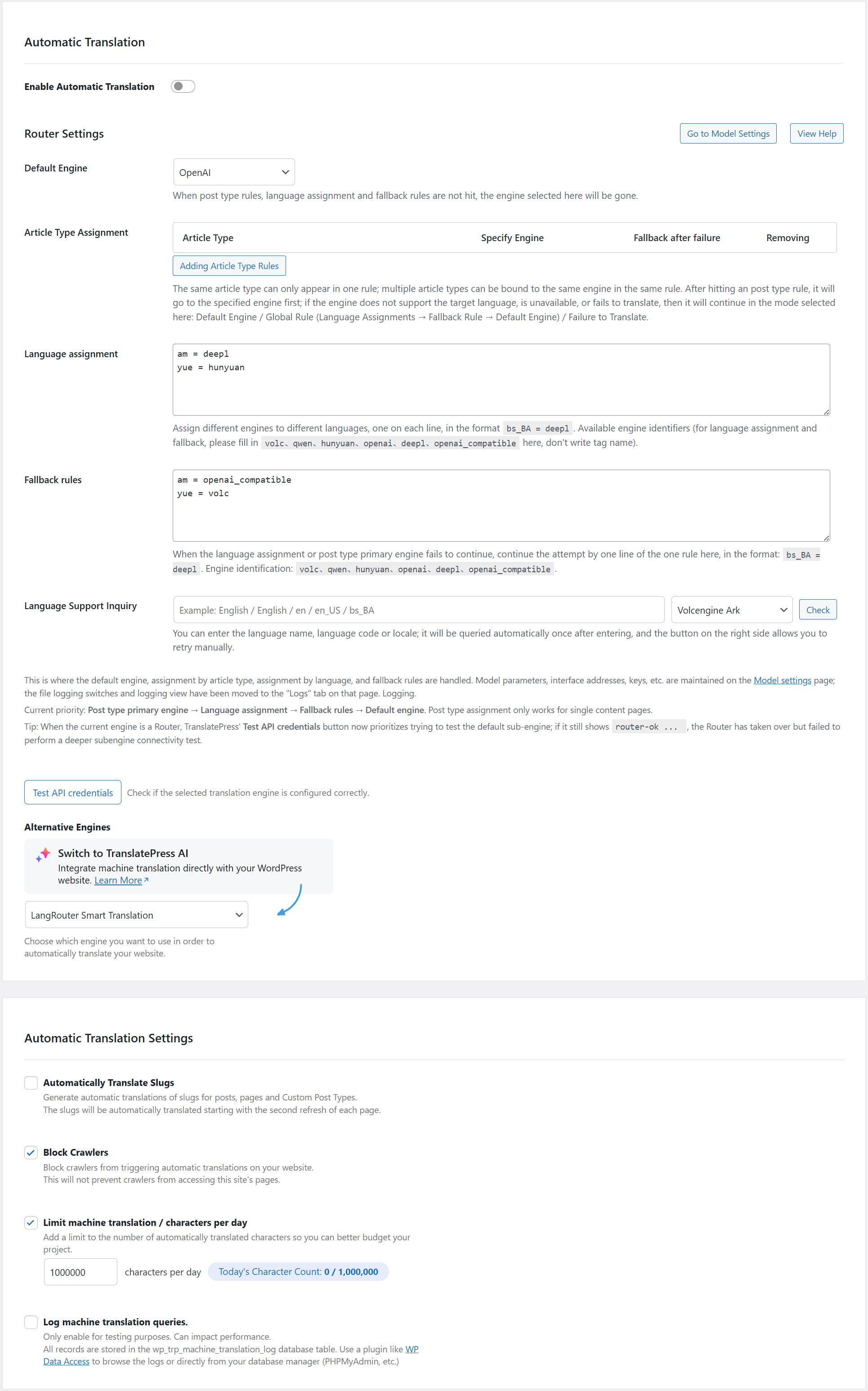
If the current page is a single article, page, product or custom article type detail page, check the article type assignment rules first.
It will only go to language allocation if no higher priority rules are hit, or if the previous rules allow the global link to continue.
The fallback rule is not the main route, but rather the current main engine fails before it starts to take over.
The default engine is the ultimate under-the-hood solution, not all requests go through it first at the outset.
The difficulty is never “can it be translated automatically”, but how to control it once it's online.
People who will actually use this plugin are concerned with control, failure strategies and troubleshooting.
One Engine Running All Content
It's hard to balance effectiveness and cost when product pages, blog pages, landing pages, and help centers all go the same engine.
Wide variations in language adaptation
One engine is great for one language and mediocre for another, making it difficult to do both in a single route.
How to continue after failure
Should I just stop, just cut the default engine, or continue the global fallback chain? Hard to do without a routing layer.
You can't see what's going on when things go wrong.
It's not just about “failing”, it's about who you hit, who you fall back to, and where you end up.
Not “default engine + some additional rules”, but a sequential execution chain
Article Type Main Engine
Highest priority, but only in effect on a single content page.
language allocation
Determining the main engine by target language is suitable for triaging key languages separately.
Fallback rules
Intervenes only when the current primary engine fails and does not participate in primary routing.
Default Engine
Manually specified in the background as a final tout.
The most valuable thing about article type rules is that each rule determines how to go after a failure
Perfectly suited for critical content, it stops directly upon failure and does not continue any subsequent links.
When the current rule fails, it jumps directly to the manually specified default engine in the backend.
When the current rule fails, it continues to go through language assignment, fallback rules, and finally to the default engine.
These are the points that show the value of the plugin more than “how many engines are supported”.
Default engine manually specified
Clearly set up base and final pocket programs that are better suited to the production environment.
Article types can be finely triaged
Individual articles, pages, products, and custom article types can all be assigned a separate main engine.
Independent failure strategies for each rule
Instead of a uniform fallback, different content types can have different failure handling.
Separation of language allocation and fallback
How to choose the main engine and how to connect it after failure are configured separately and independently for clearer logic.
Backend Query Language Support
Support can be queried by language name, code or locale, verify before configuring.
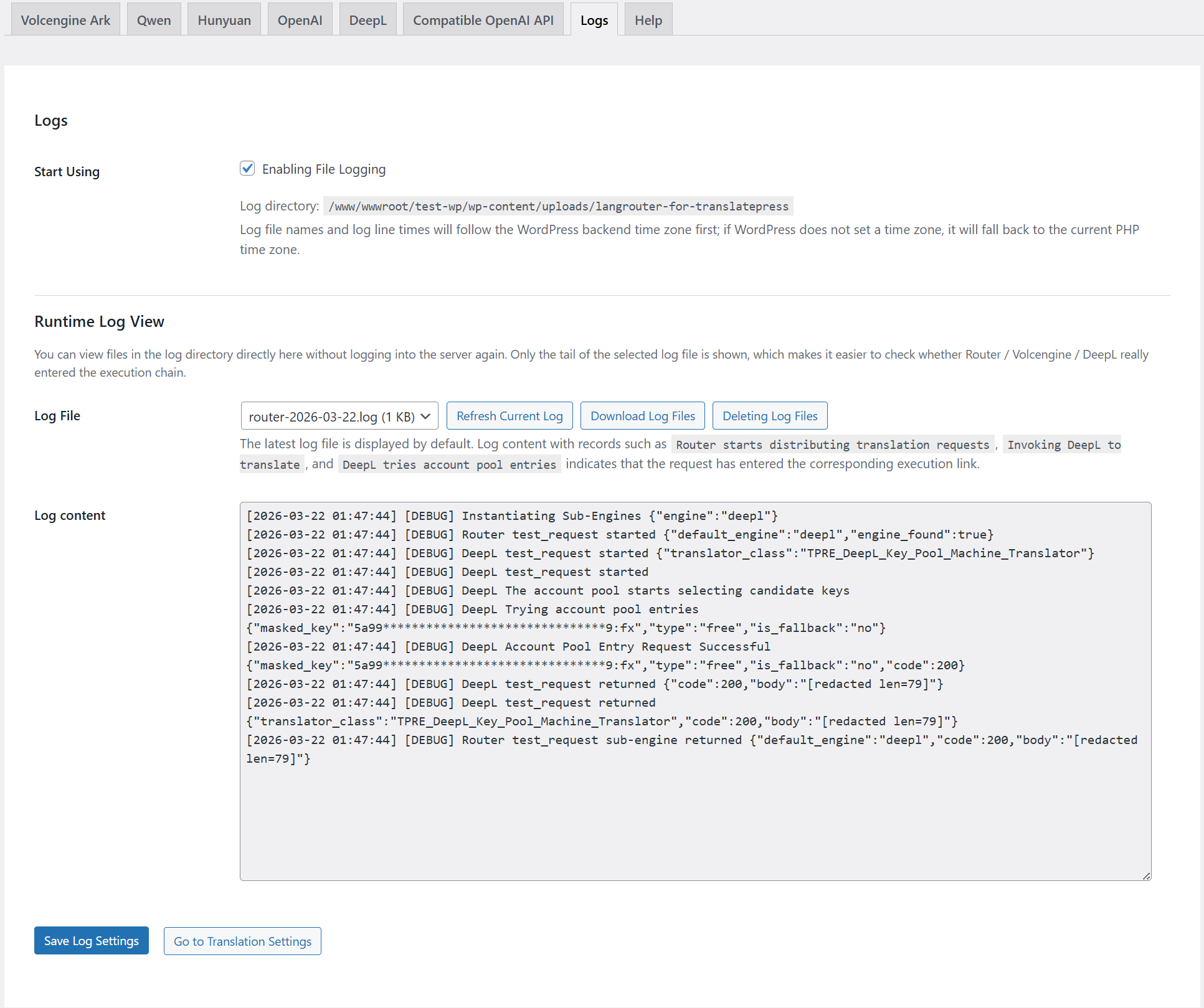
Logs trace real links
The ability to see the source of the hit, the current engine, the fallback source, and the final state, no more blind guessing.
Supported Engines
Screenshot of the plugin's backend settings
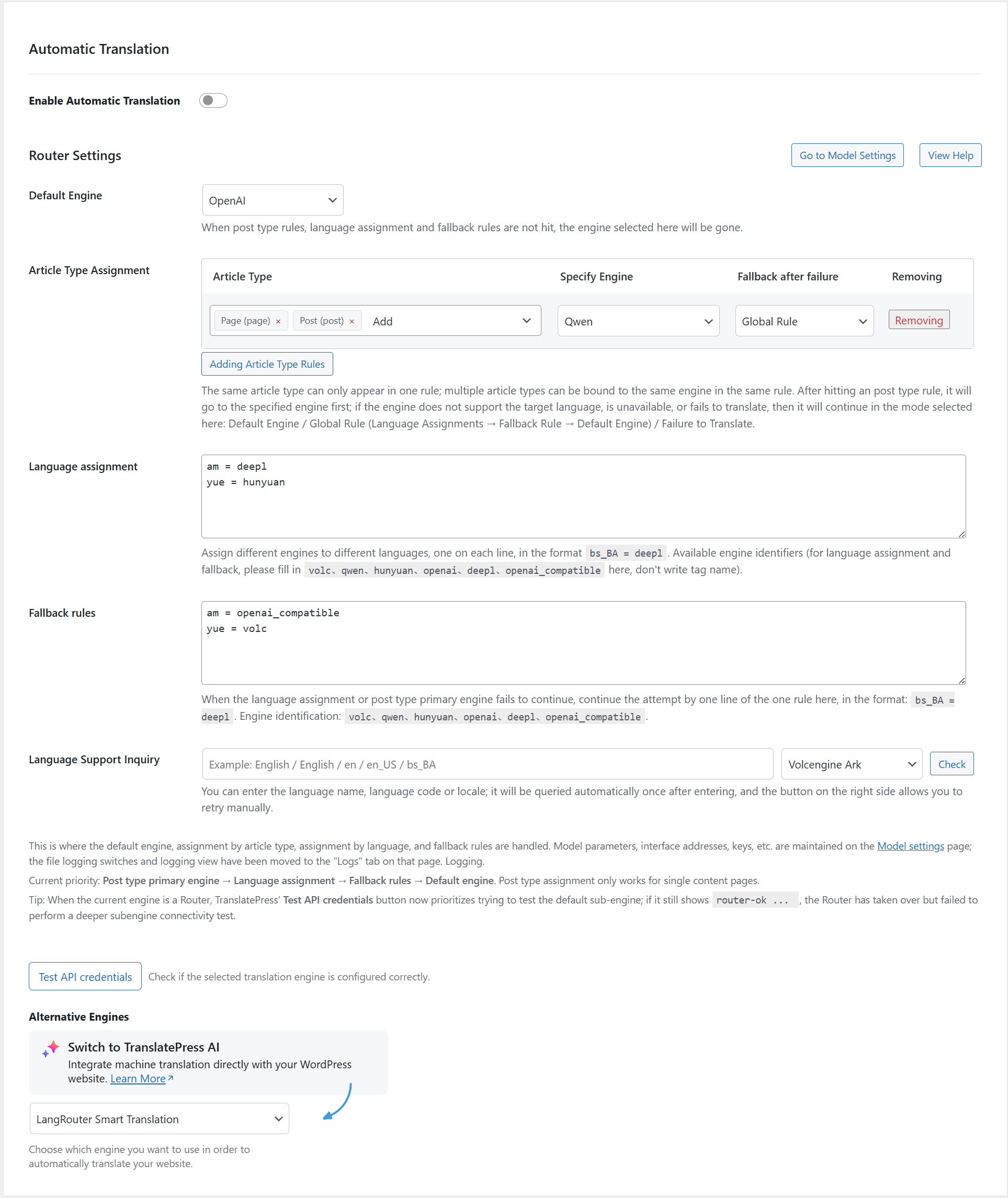
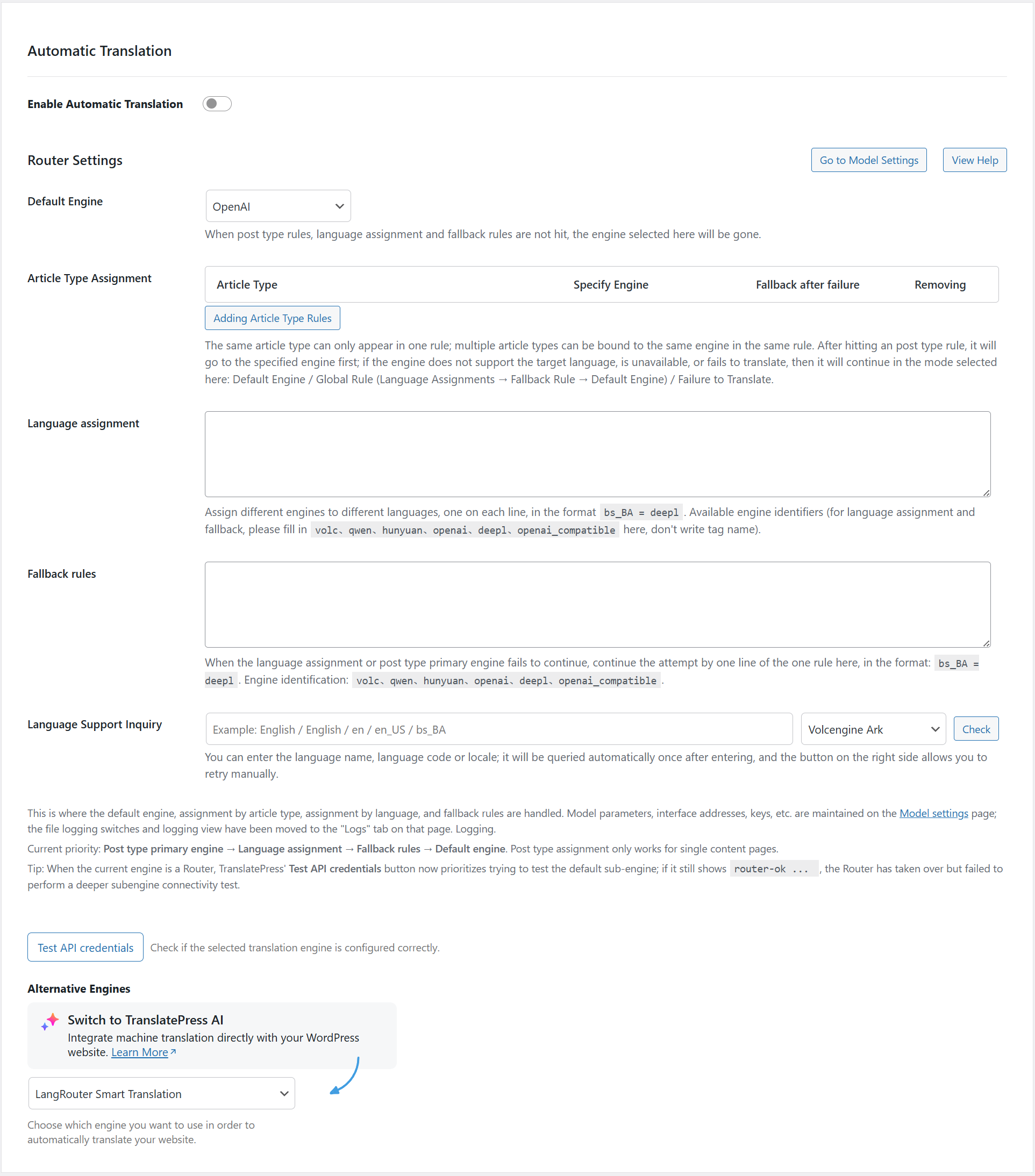
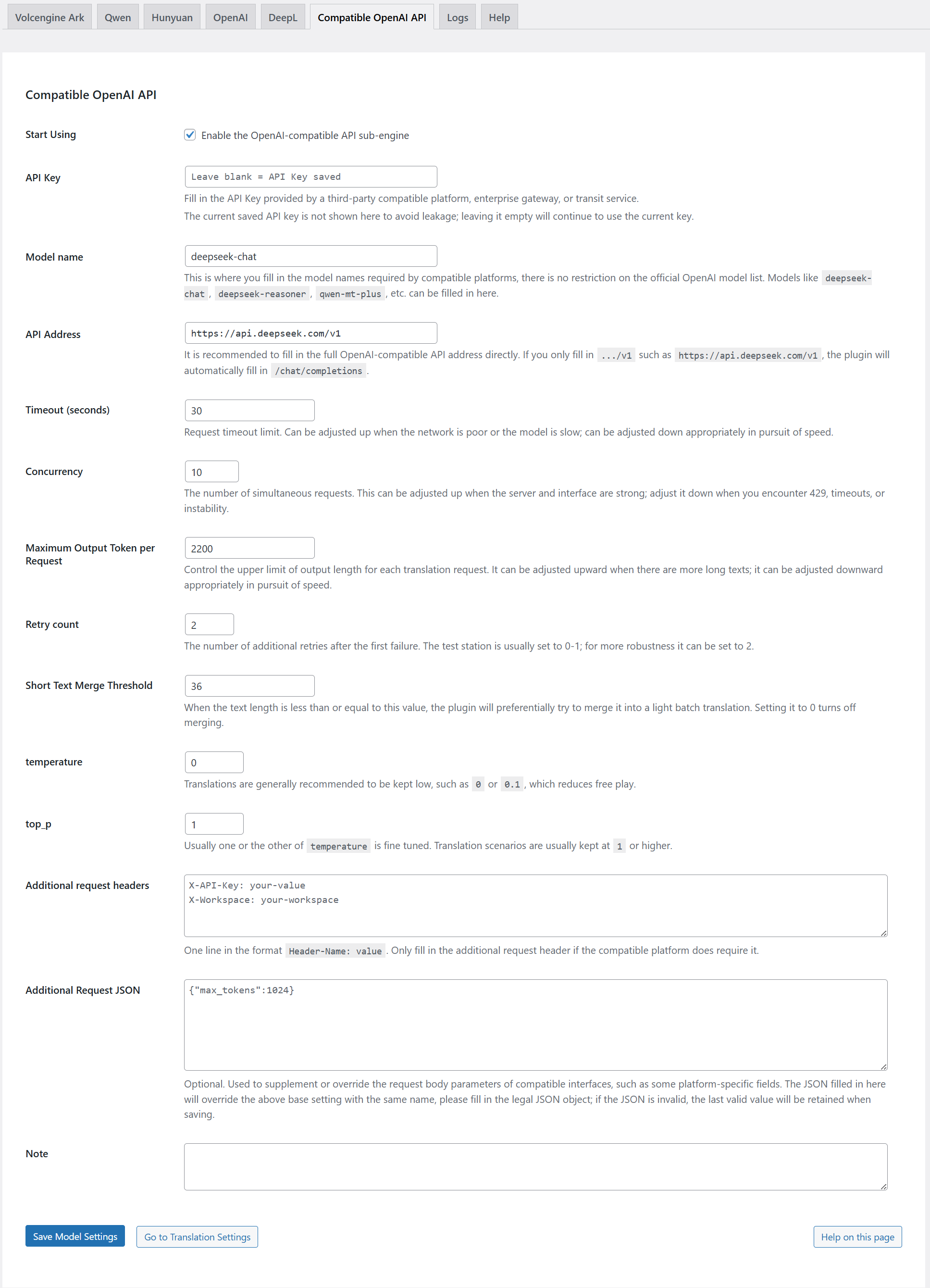
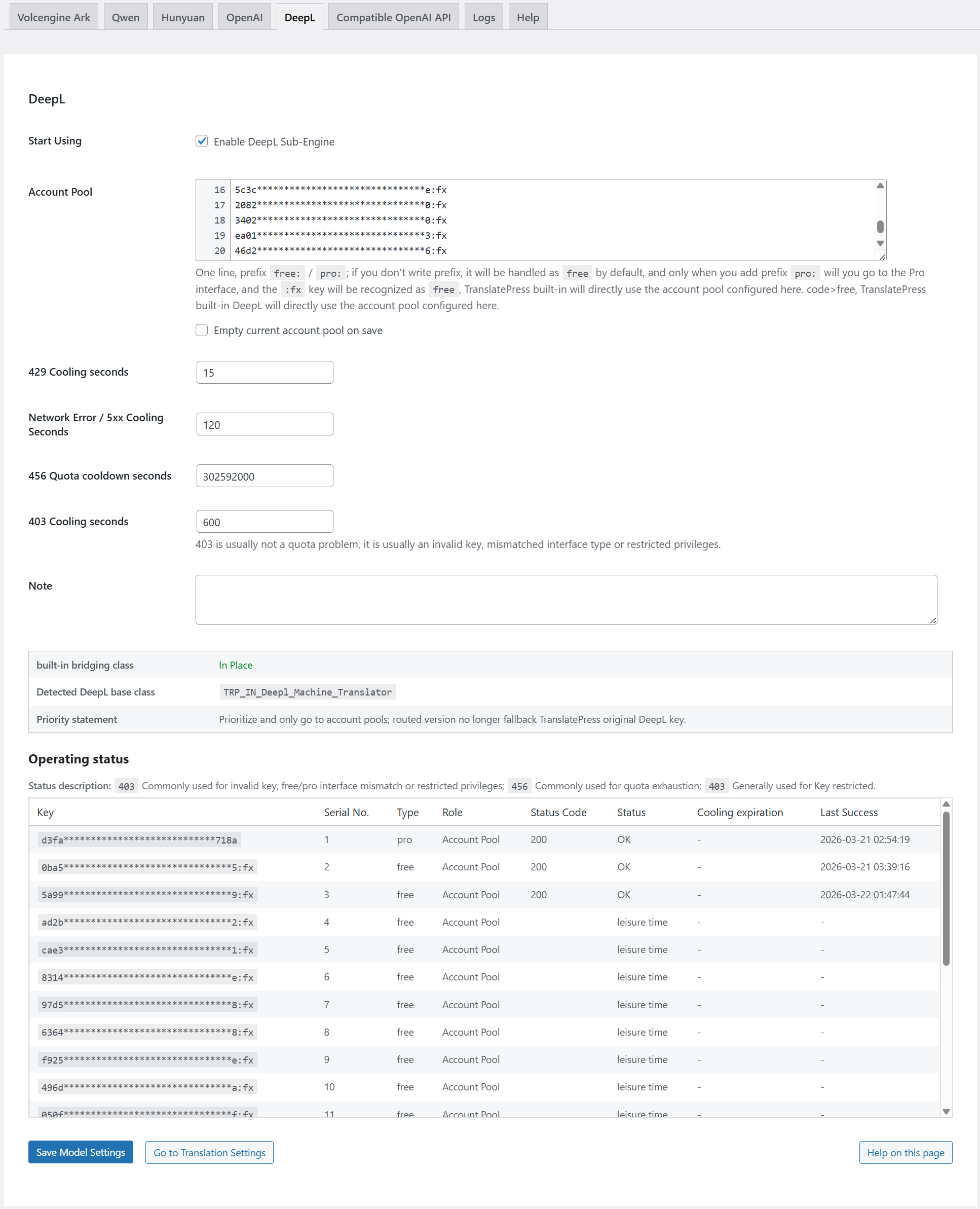
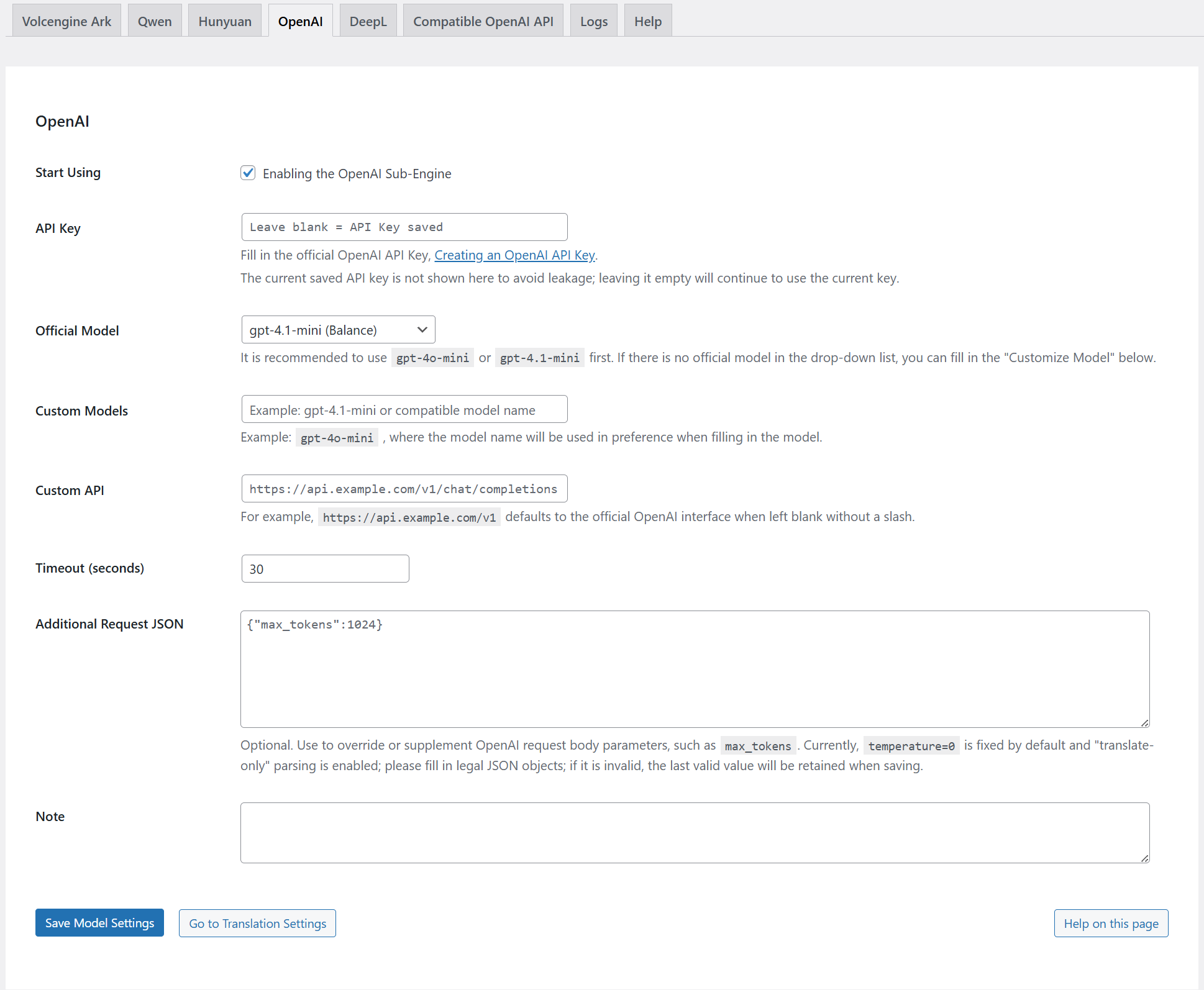
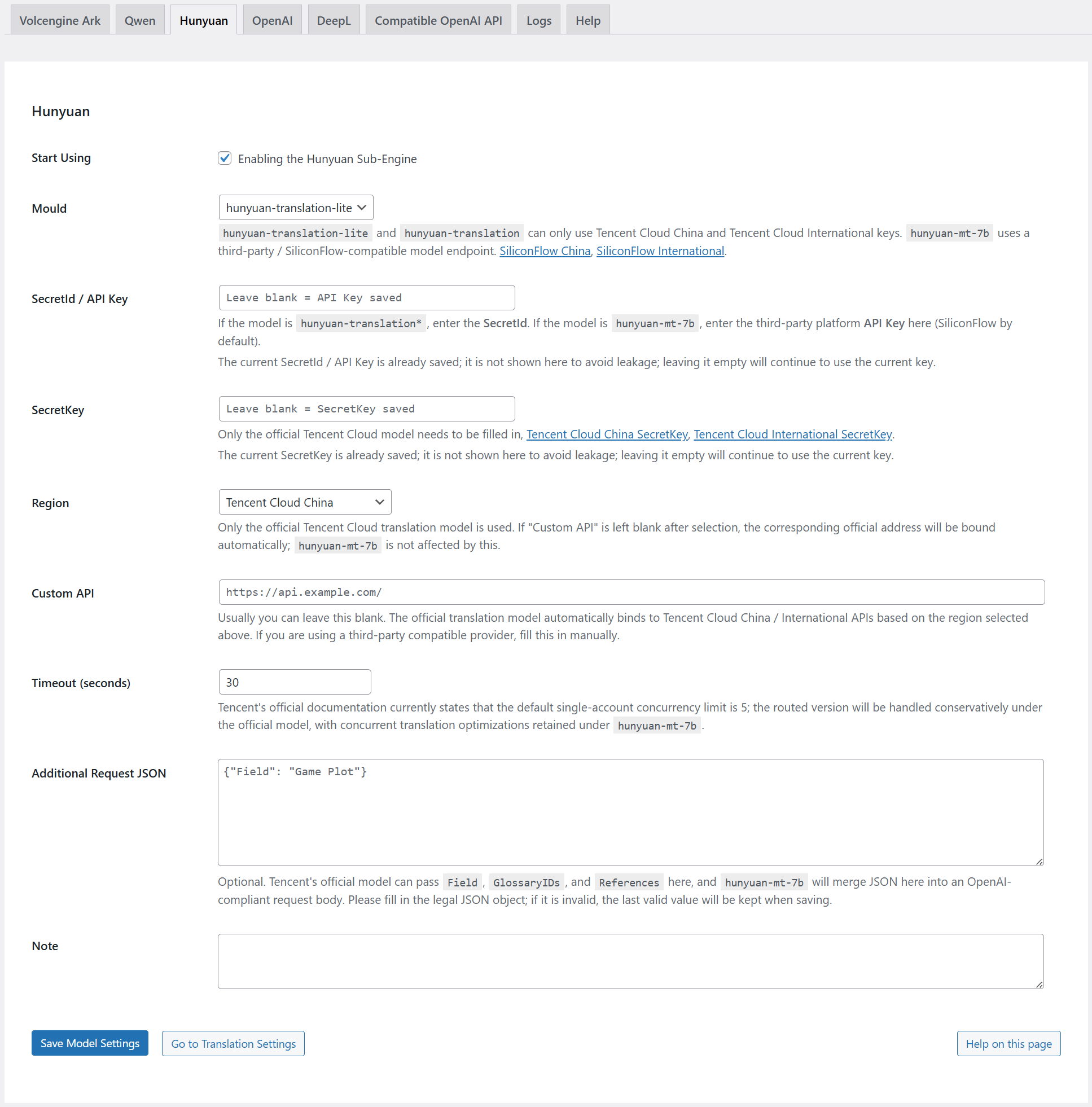
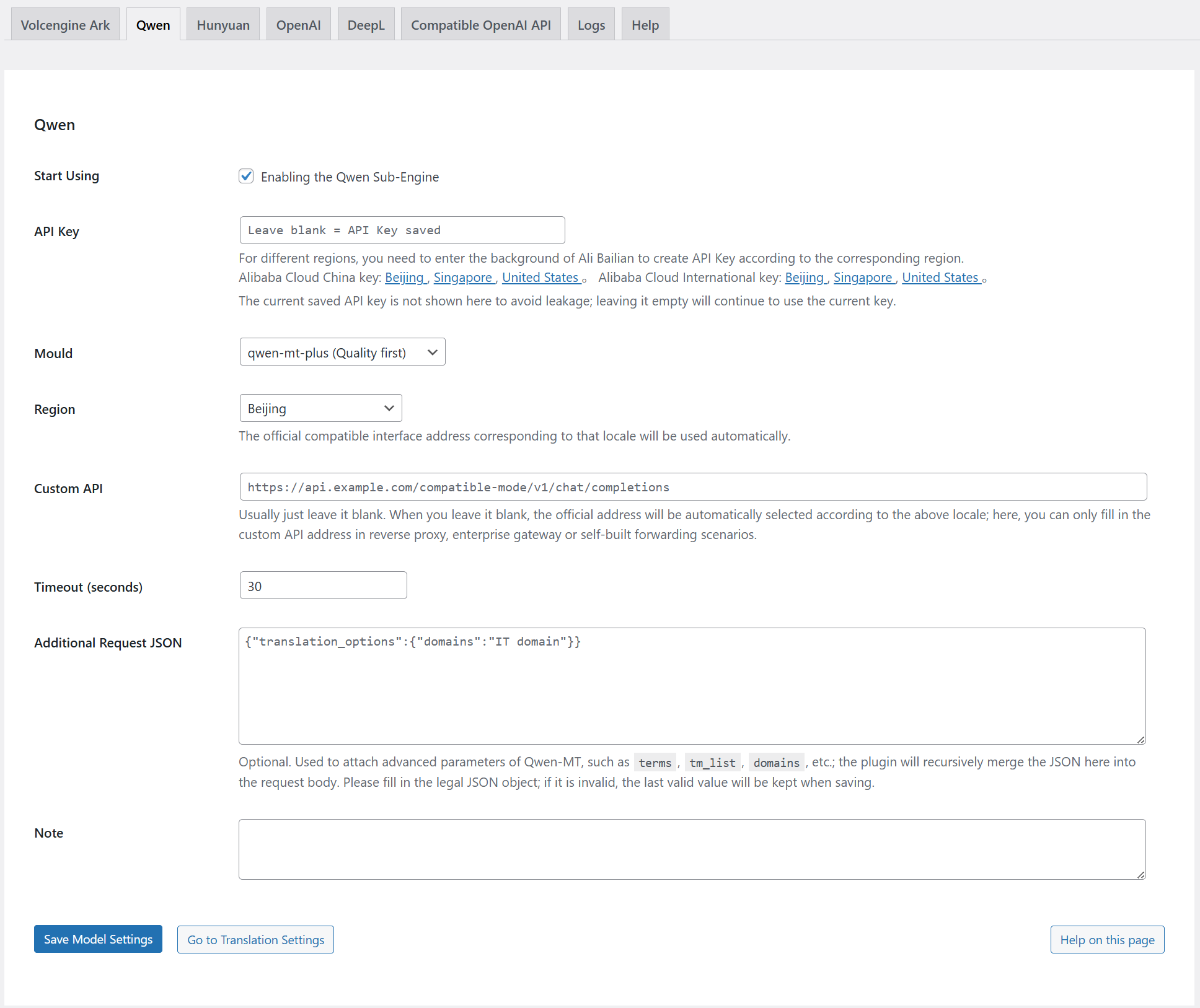
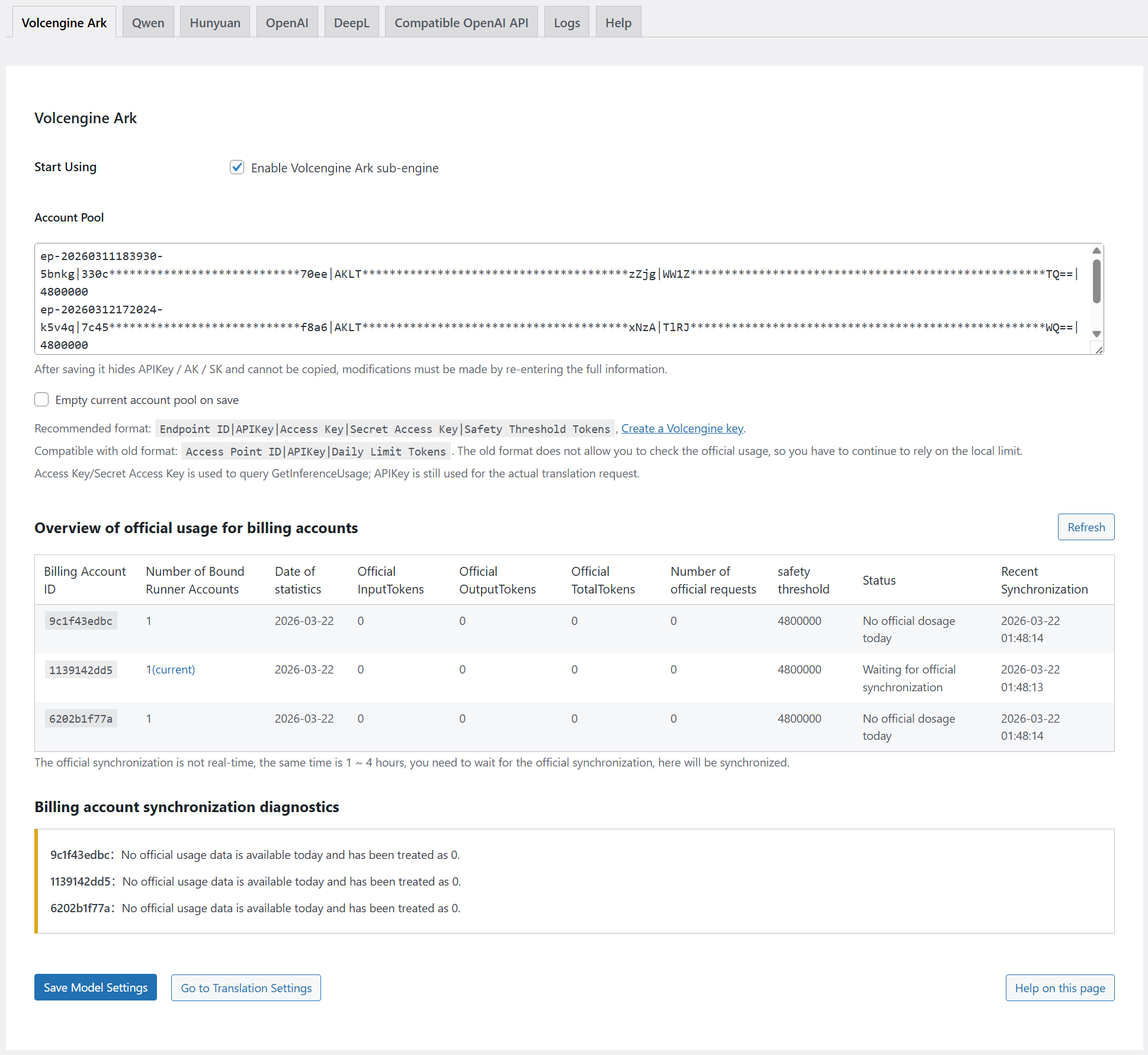
A few examples of configurations that understand value at a glance
The most stable way to start: set only the default engine
First, set the only translation engine that has been verified in the background as the default engine to ensure that the whole automatic translation link runs through first, and then gradually increase the routing rules.
Ideal for just accessing, just migrating, and seeking stability first.
默认引擎:OpenAI
文章类型分配:不配置
语言分配:不配置
回退规则:不配置
Default engine for most languages, a few languages optimized individually
This is a very practical way to play it: remain stable overall, but divert a few key languages individually to more appropriate engines.
Ideal for those who already have a main engine, but want to optimize local language performance.
默认引擎:OpenAI
语言分配:
en_US = Hunyuan
yue = DeepL
am = OpenAI Compatible
Commodity pages prioritize going to the specified engine, and when it fails, directly cut the default pockets
Great for malls: product detail pages prioritize the use of engines better suited to terminology scenarios, but don't procrastinate when they encounter failures, just cut the default engine.
Suitable for WooCommerce, multilingual malls, and product sites.
默认引擎:OpenAI
文章类型分配:
product -> DeepL(仅默认引擎)
Key content must only go to the specified engine and stop when it fails
Some content you'd rather not flip than have it error back to another engine to continue generating.
Ideal for brand statements, legal pages, terminology pages.
默认引擎:DeepL
文章类型分配:
guides -> Qwen(失败不翻译)
语言分配:
am = Volcengine Ark
回退规则:
am = Hunyuan
Continuing the global link after article type failure to form a complete fallback system
This is one of the most production-like configurations: go to the exclusive main engine first, and when it fails, continue with language allocation, fallback rules, and only finally land on the default engine.
Suitable for sites with complex content structure, many languages and high availability requirements.
默认引擎:DeepL
文章类型分配:
guides -> Qwen(全局规则)
语言分配:
am = Volcengine Ark
回退规则:
am = Hunyuan
A few of the most misunderstood points
Does the default engine always go first?
It isn't. The default engine is a manually specified last-pocket solution in the backend, not all requests go through it first to begin with.
Does the article type rule take effect on all pages?
Negative. Article type rules only work for single content pages, such as single articles, single pages, product detail pages, and custom article type detail pages.
Are the language assignment and fallback rules the same?
Not the same. The language assignment determines the main engine, and the fallback rules only start to intervene when the current main engine fails.
What is the biggest value of this plugin?
Rather than hooking up a few more translation interfaces, it turns automatic translation into a configurable, fallback, verifiable, and troubleshootable execution link.
Stop asking “which engines are supported” and start asking “who should handle which requests”.”
The real value of LangRouter for TranslatePress is to upgrade automatic translation from a single interface call to a designable translation scheduling system.
 English (UK)
  Acehnese
  Afrikaans
  Shqip
Shqip  Հայերեն
  অসমীয়া
  Aymara
  Azərbaycan dili
  Bashkir
  Euskara
  Беларуская мова
  বাংলা
বাংলা  Bhojpuri
  Bosanski
  Български
  Català
  Cebuano
  Hrvatski
  Čeština
  Dansk
Dansk  Dari
Dari  Nederlands
  Esperanto
  Eesti
Eesti  Suomi
Suomi  Français du Canada
  Galego
  ქართული
  Ελληνικά
  Guarani
  ગુજરાતી
  Haitian Creole
  Hausa
Hausa  עִבְרִית
  हिन्दी
  Magyar
  Igbo
Igbo  Bahasa Indonesia
  Italiano
  Basa Jawa
  Kapampangan
  Қазақ тілі
  Konkani
  Kurdish (Kurmanji)
  كوردی
كوردی  Кыргызча
  Latviešu valoda
  Lingala
  Lietuvių kalba
  Lombard
  Македонски јазик
  Maithili
  Malagasy
  Bahasa Melayu
  मराठी
मराठी  Монгол
  العربية المغربية
  ဗမာစာ
ဗမာစာ  नेपाली
  Pangasinan
  پښتو
پښتو  فارسی
فارسی  (فارسی (افغانستان
  Polski
  Português do Brasil
  Português
  Quechua
  Română
  Српски језик
  Sicilian
  Slovenčina
  Slovenščina
  گؤنئی آذربایجان
  Español de México
  Sundanese
  Kiswahili
  Svenska
  Tagalog
  Tajik
Tajik  தமிழ்
தமிழ்  Татар теле
  తెలుగు
  ไทย
ไทย  Tsonga
  Tswana
  Türkçe
  Turkmen
  Українська
  اردو
اردو  O‘zbekcha
  Tiếng Việt
  Wolof
Wolof  Xhosa
Xhosa  English (Australia)
  English (Canada)
  English (New Zealand)
  English (South Africa)
  Aragonés
  Nederlands (België)
  Breton
  አማርኛ
አማርኛ  ភាសាខ្មែរ
  മലയാളം
  هزاره گی
  Maori
Maori  Hornjoserbšćina
  ئۇيغۇرچە
  བོད་ཡིག
  தமிழ்
தமிழ்  Reo Tahiti
  Español de Venezuela
  Español de Uruguay
  Español de Puerto Rico
  Español de Perú
  Español de Ecuador
  Español de Costa Rica
  Maltese
  Íslenska
  Friulian
  ಕನ್ನಡ
ಕನ್ನಡ  Frysk
Frysk  Luxembourgish
  ພາສາລາວ
  Latin
Latin  Norsk bokmål
  རྫོང་ཁ
  Сахалыы
  Deutsch (Österreich)
  Taqbaylit
  Norsk nynorsk
  Occitan
  ਪੰਜਾਬੀ
  Português de Angola
  Gàidhlig
  Português (AO90)
  Irish
Irish  Sanskrit
  سرائیکی
  سنڌي
سنڌي  Dolnoserbšćina
  Ruáinga
  Español de Argentina
  Español de Chile
  Deutsch (Schweiz, Du)
  Ślōnskŏ gŏdka
  සිංහල
සිංහල  Español de República Dominicana
  Español de Guatemala
  Français de Belgique
  Español de Colombia
  Cymraeg